
A NEW CRYPTOGRAPHIC PARADIGM BEYOND COMPUTATIONAL HARDNESS
Structural non-identifiability for the post-quantum era.
Inspired by ideas hidden for decades in Ramanujan’s final notebooks, our research explores a new cryptographic framework where observable data no longer uniquely determines identity.
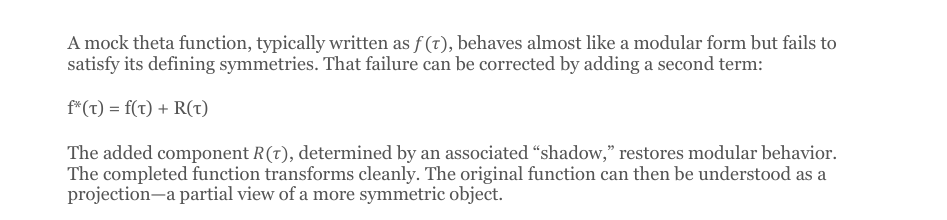
“The observable data does not uniquely specify the underlying identity.”
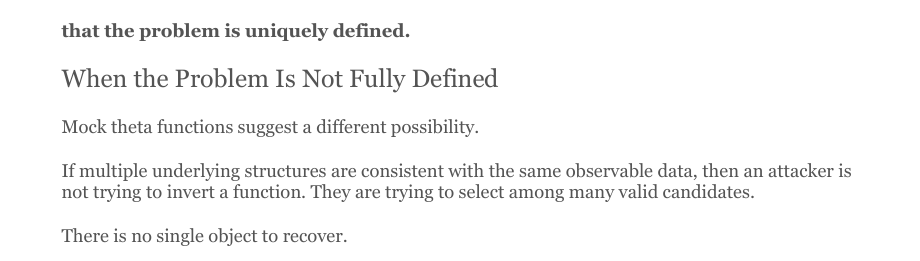

THE PROBLEM
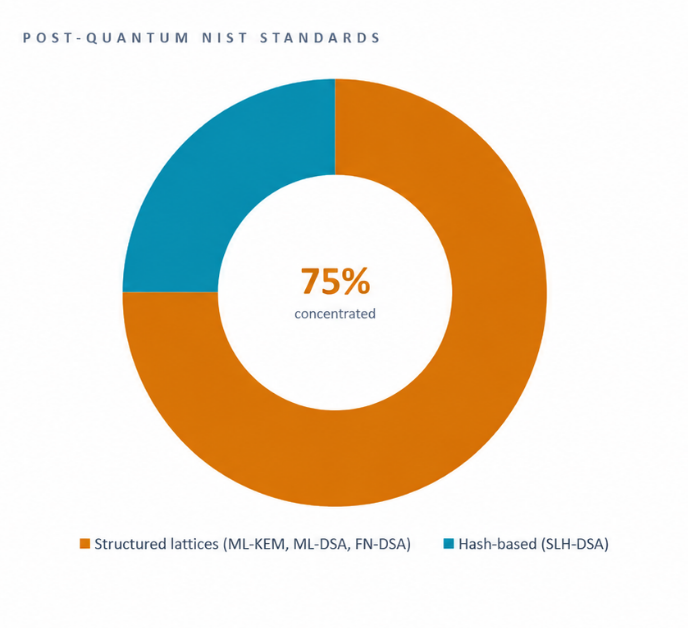
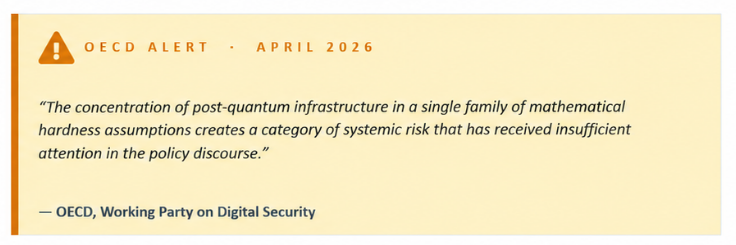
Concentration in post-quantum lattice infrastructure.
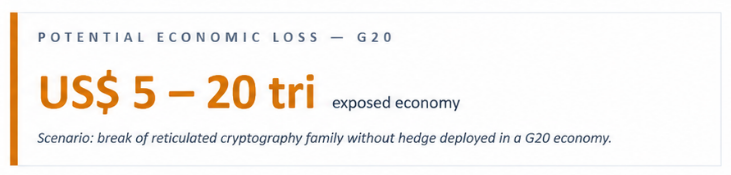
Potential exposed economic infrastructure
THE COMING CRYPTOGRAPHIC TRANSITION
Security based solely on computational hardness may not be sufficient for the post-quantum era.
Quantum computing introduces a structural challenge to modern cryptography. Most post-quantum systems remain concentrated around a narrow family of mathematical assumptions, creating systemic exposure at global scale.
The risk is not limited to computational power. It is also architectural. A monoculture of cryptographic foundations increases the possibility of correlated failure across financial, governmental and critical infrastructure systems.
REGIME III CRYPTOGRAPHY
From inversion hardness to controlled non-identifiability.
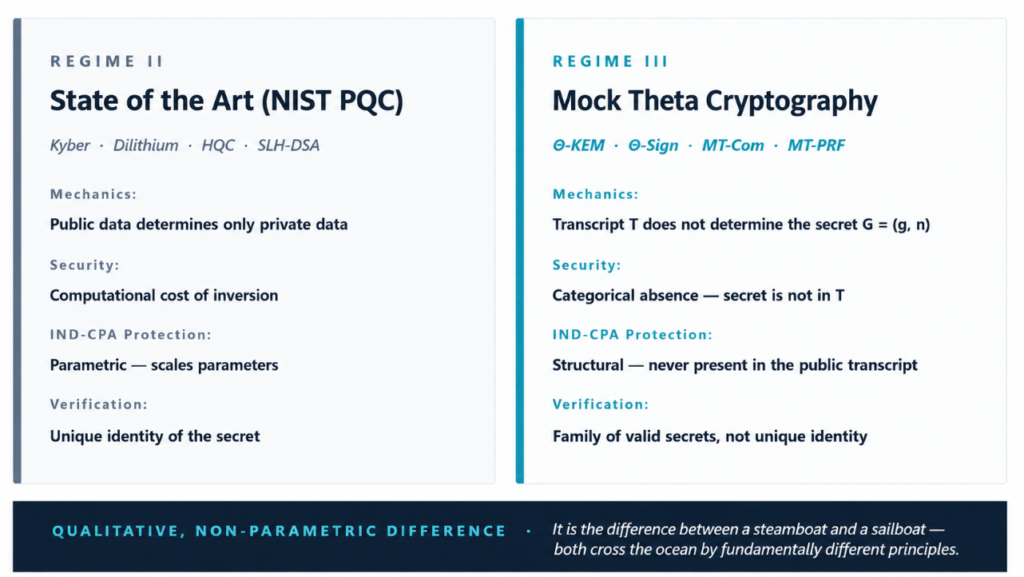
“The secret never existed in the public transcript.”
The attacker is no longer solving a difficult problem.
The attacker is attempting to resolve an intrinsically ambiguous one.
MATHEMATICAL FOUNDATION
Inspired by Ramanujan’s mock theta functions and harmonic Maass forms, the framework explores a separation between what is locally observable and what is globally determined.
Instead of relying exclusively on computational hardness, the architecture investigates structural ambiguity as a foundation for cryptographic security.
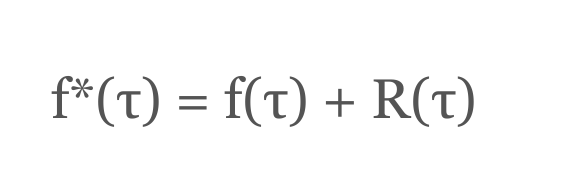
Mock theta functions behave almost like modular forms, but require an additional hidden component — the shadow term — to recover global consistency.
Harmonic Maass forms introduce a separation between what is locally observable and what is globally determined.
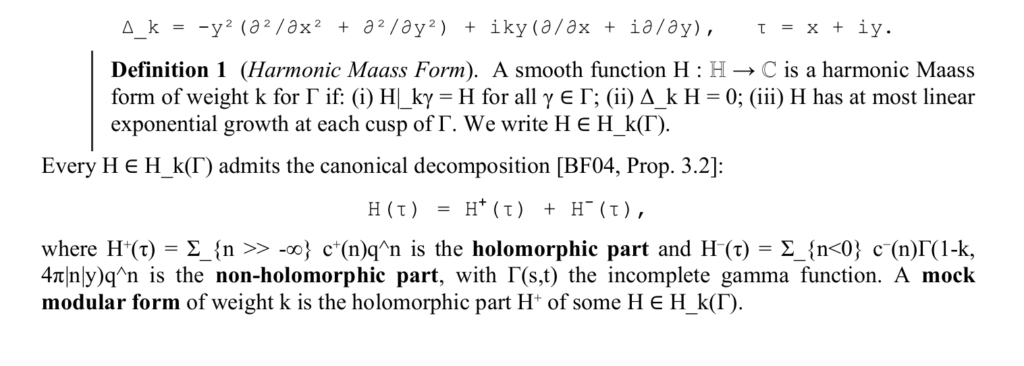
The observable does not contain the identity.
Harmonic Maass forms separate what is locally observable from what is globally determined.
In this framework, observable data may remain incomplete with respect to the underlying mathematical identity.
Shadow operator
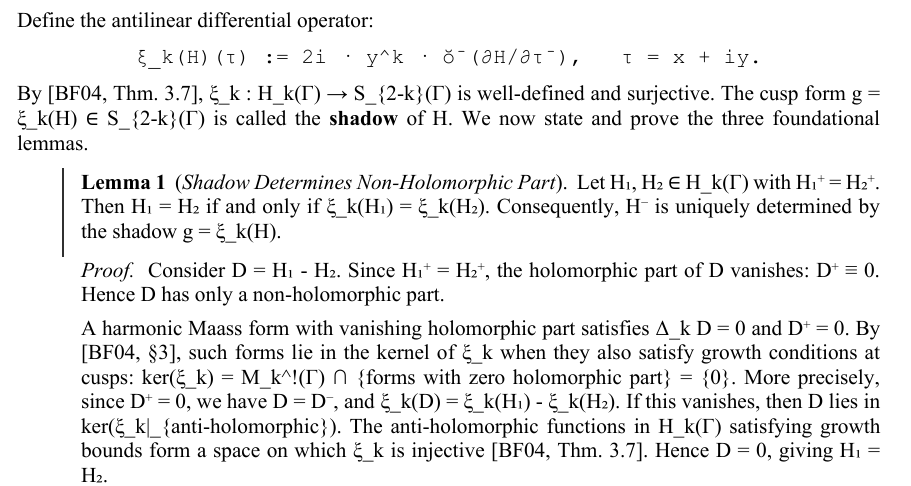
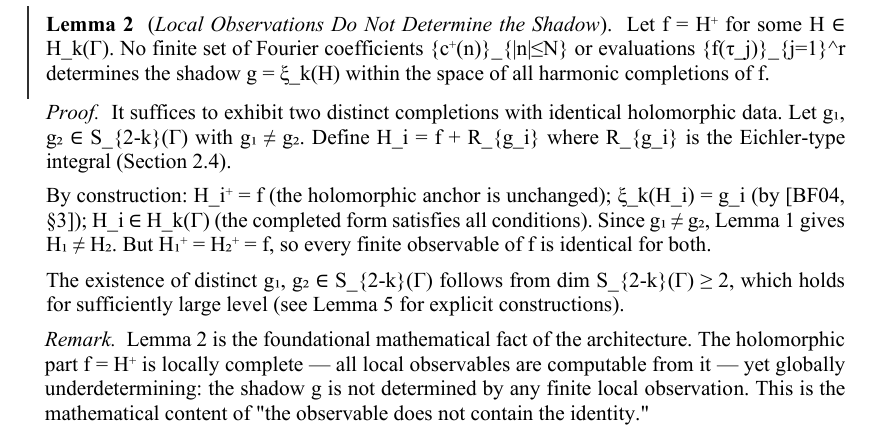
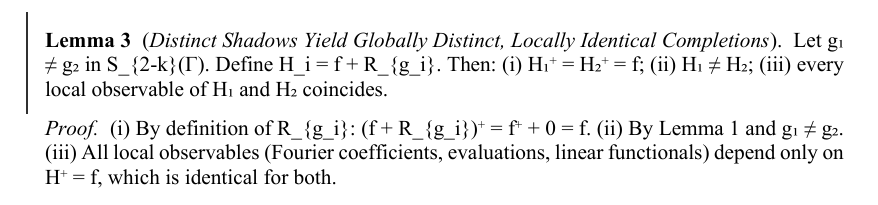
The shadow operator reconstructs hidden structural information that cannot be uniquely inferred from local observations alone.
Engineeri
FROM THEORY TO ENGINEERING
A post-quantum architecture designed for real computational systems
- ✔ Rust
- ✔ FPGA
- ✔ Theta-KEM
- ✔ Theta-Sign
- ✔ APIs
- ✔ software stack
- ✔ validation
- ✔ performance
Rust
Implementation layer designed for high-performance cryptographic execution and secure systems integration.
FPGA
Hardware-oriented acceleration layer for deterministic low-latency cryptographic operations.
Theta-KEM
Theta-KEM introduces key encapsulation mechanisms derived from structurally non-identifiable mathematical constructions.
Instead of relying exclusively on inversion hardness, the mechanism explores ambiguity between multiple valid underlying structures.
Theta-Sign
Theta-Sign extends the framework into digital signature systems where verification does not uniquely expose the originating structural identity.
APIs
Interface architecture designed for integration into distributed applications and secure infrastructure environments.
Validation
Formal validation processes designed to ensure consistency, reproducibility and operational integrity.
Performance
Engineering focused on scalability, throughput optimization and real-world deployment feasibility.
Cryptographic Mechanisms
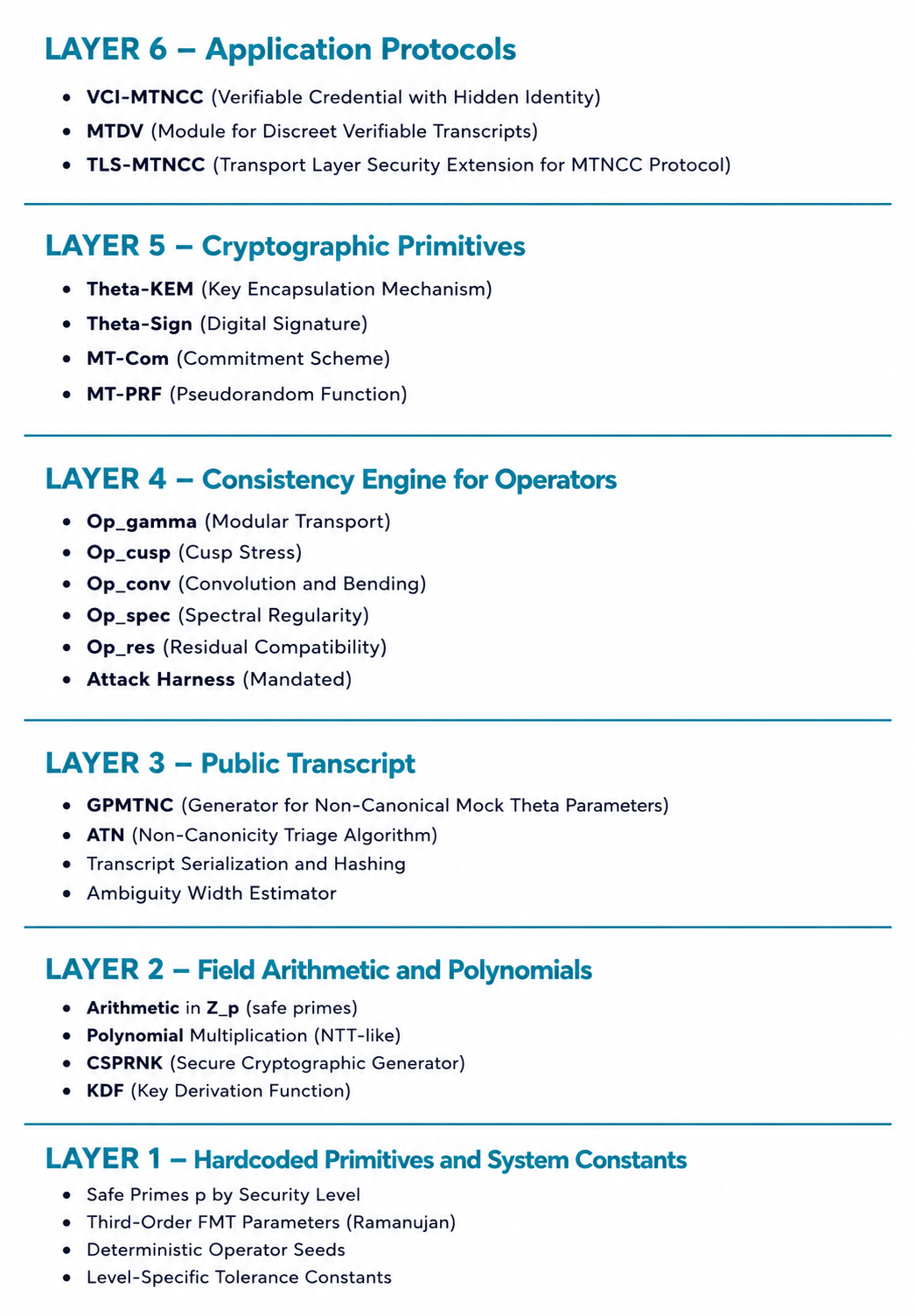
SYSTEM ARCHITECTURE
A layered post-quantum cryptographic stack
LAYER 6 — APPLICATION PROTOCOLS
↓
LAYER 5 — CRYPTOGRAPHIC PRIMITIVES
↓
LAYER 4 — CONSISTENCY ENGINE
↓
LAYER 3 — PUBLIC TRANSCRIPT
↓
LAYER 2 — FIELD ARITHMETIC
↓
LAYER 1 — MATHEMATICAL FOUNDATION
research & publication
manifesto institucional
Not everything that is hidden is hidden by complexity.
Some structures remain inaccessible because observable data does not uniquely determine identity.
Our research explores cryptographic systems based not only on computational hardness, but on structural non-identifiability itself.
ABOUT

LAWRENCE KOO CHUNG
Lawrence Chung Koo is a mechanical engineer and senior executive with more than five decades of experience spanning technology, governance, communication sciences, artificial intelligence and organisational transformation. His academic background includes advanced studies in Communication & Semiotics, Artificial Intelligence, Systems Engineering and Corporate Governance, reflecting a multidisciplinary approach to complex institutional systems.
Over a 36-year career at IBM, Lawrence held both technical and executive leadership roles, developing expertise at the intersection of engineering, strategy and innovation management. His professional trajectory also includes advisory roles with international institutions such as the World Bank, leadership positions within academic governance structures, and active participation on corporate and advisory boards.
Throughout his career, he has combined executive management with academic leadership, serving in senior university administration roles including Pro-Rector positions and strategic advisory functions. His work extends into research on emerging technologies, Society 5.0 frameworks, public policy and AI-driven transformation, alongside mentoring roles within startup ecosystems and innovation networks.
As CEO of Holosystems, Lawrence leads organisational strategy, institutional governance and global positioning. His mandate focuses on aligning advanced scientific research with sustainable corporate execution, ensuring that Holosystems operates at the intersection of technological rigor, ethical innovation and long-term institutional resilience.

MARCOS EDUARDO ELIAS
Marcos Eduardo Elias is a Brazilian mathematician, theoretical computer scientist and entrepreneur with over three decades of experience across academia and the financial sector. Holding two PhDs in Mathematics and one in Computer Science, his work reflects a sustained commitment to foundational research in computation, mathematical structures and complex systems.
Throughout his career, Marcos has bridged rigorous theoretical inquiry with applied strategic innovation. In the financial sector, he co-founded Empiricus Research and contributed to the development of quantitative investment strategies and advanced risk methodologies. His trajectory combines formal mathematical reasoning with practical decision-making frameworks.
As Founder and Architect of Holosystems, Marcos provides the conceptual and scientific foundations that guide the company’s long-term research direction. His work focuses on advanced computational architectures, including the integration of probabilistic reasoning, fuzzy logic and quantum-era methodologies designed to operate within the constraints of Noisy Intermediate-Scale Quantum (NISQ) systems.
In his non-executive role as Senior Research Fellow, Marcos contributes to the strategic scientific vision of the organisation while supporting the development of robust theoretical frameworks that underpin Holosystems’ technological evolution.
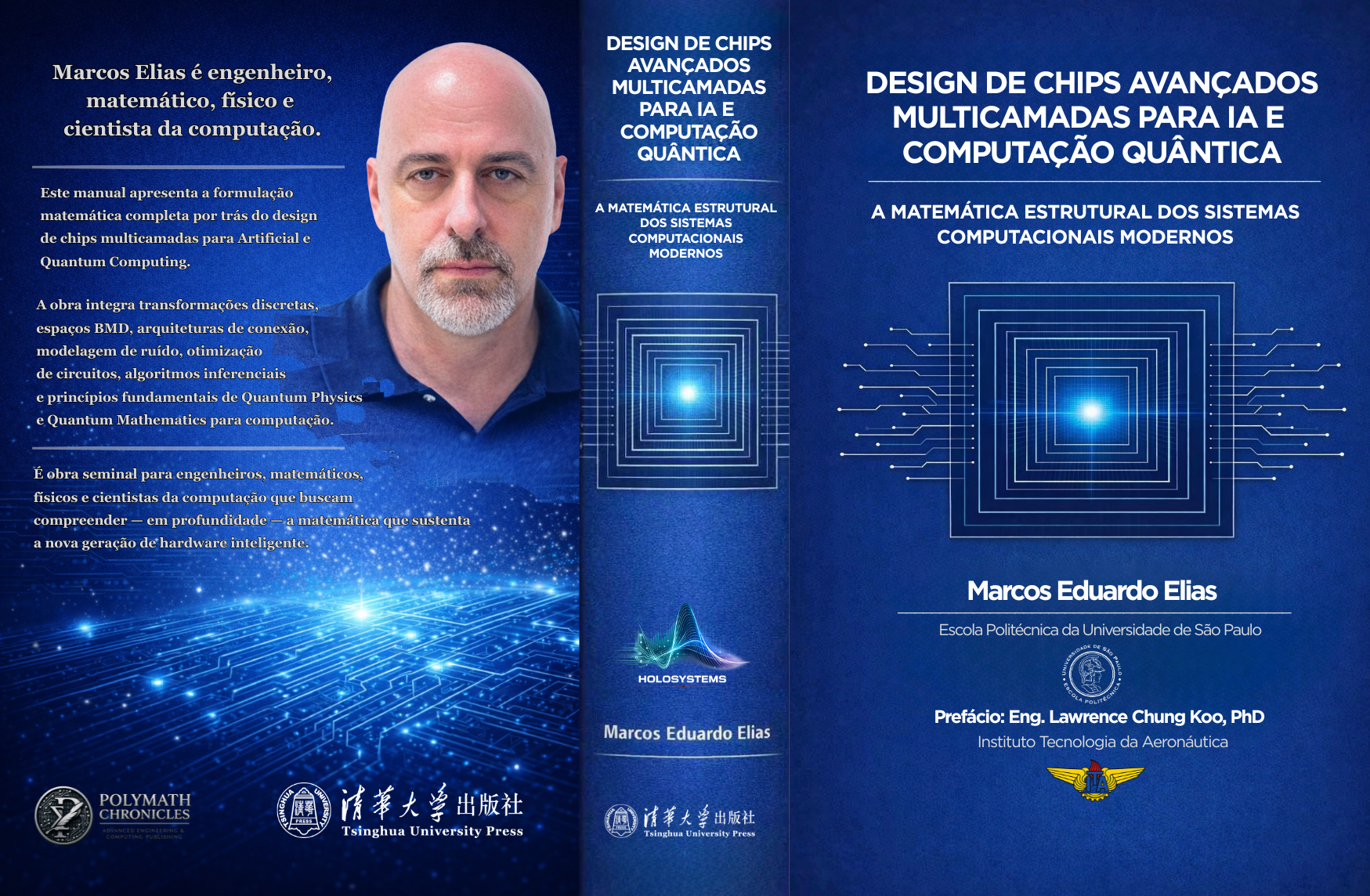
DESIGN DE CHIPS AVANÇADOS MULTICAMADAS PARA IA E COMPUTAÇÃO QUÂNTICA
SOBRE
SEGURANÇA PARA A PRÓXIMA ERA DIGITAL
A computação quântica representa um avanço sem precedentes, e também um novo desafio para a segurança de dados. Nossa proposta nasce para antecipar esse cenário, desenvolvendo soluções em criptografia pós-quântica capazes de proteger informações sensíveis contra ameaças futuras
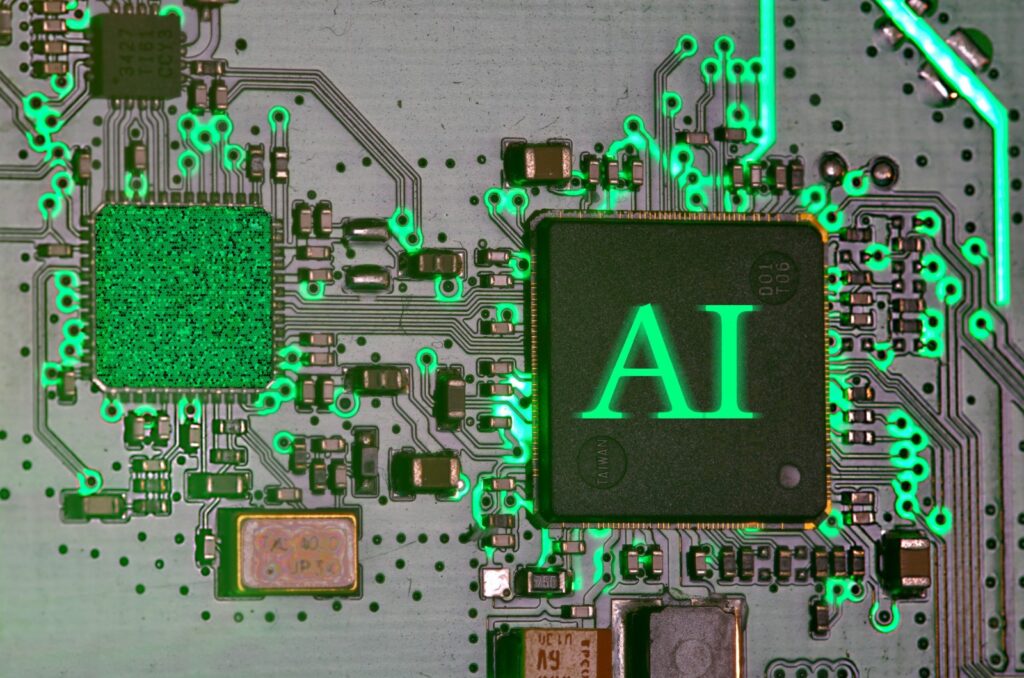
Criptografia pós-quantica
Desenvolvemos soluções avançadas de criptografia projetadas para resistir ao poder da computação quântica. Nosso foco é proteger dados críticos, comunicação e infraestruturas digitais contra ameaças emergentes, garantindo segurança de longo prazo em um cenário tecnológico em rápida evolução.
Segurança
Unimos pesquisas avançadas, engenharia e visão estratégica para construir uma nova camada de segurança digital, preparada não apenas para o presente mas para o que vem depois.
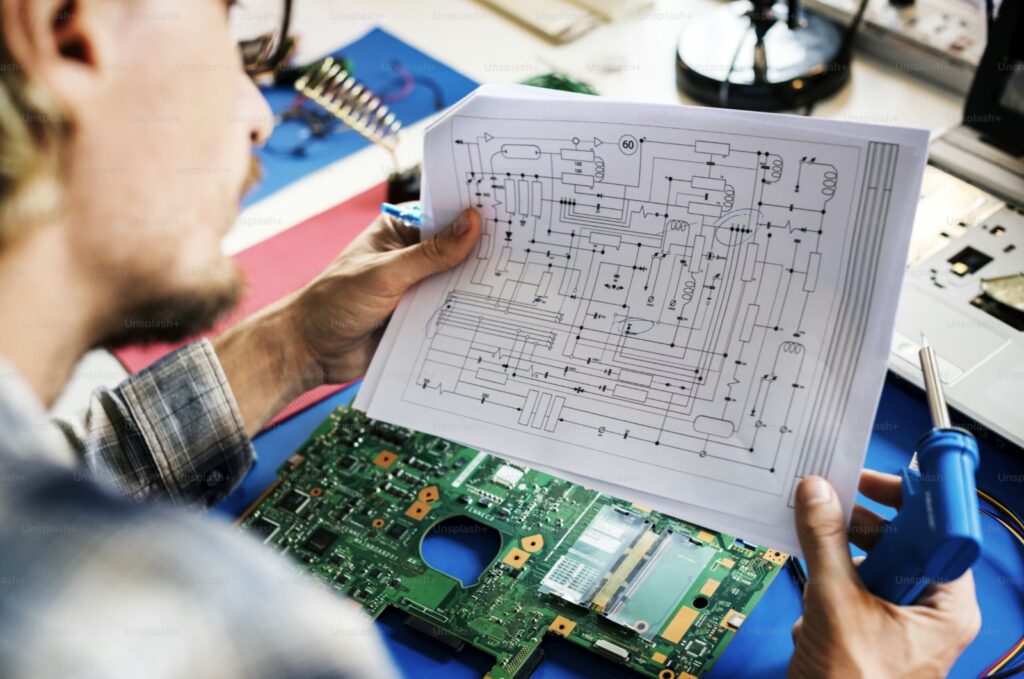
Arquitetura Seguras para Sistemas Computacionais
Criamos e implementamos estruturas de segurança integradas ao nível de software e hardware, projetadas para ambientes de alta complexidade. Nossas soluções combinam engenharia, matemática aplicada e modelagem avançada para garantir desempenho, confiabilidade e proteção em sistemas modernos.
Design de Chips Avançados para IA e Computação Quântica
Com base em pesquisa profunda e modelagem matemática, desenvolvemos arquiteturas de chips multicamadas voltadas para inteligência artificial e computação quântica. O trabalho explora novas formas de processamento, otimização de circuitos e integração entre camadas, estabelecendo fundamentos para a próxima geração de hardware inteligente.